Diagnose and Treat a Cracked Tooth in Pantego, TX
Cracked Teeth Are One of the Most Common Problems in Modern Dentistry
Teeth are placed under tremendous stress throughout life.
Years of chewing, grinding, clenching, large fillings, trauma, and bite overload can gradually weaken the tooth structure over time.
Eventually, microscopic cracks may begin developing within the enamel and dentin.
Some cracks remain small and stable, while others can progress deeper into the tooth and create significant pain, infection, or structural failure.
At Dr. Doctor’s office, cracked tooth therapy focuses heavily on early diagnosis, advanced imaging, functional bite analysis, and long-term tooth preservation whenever possible.
What Is Cracked Tooth Syndrome?
Cracked tooth syndrome occurs when a tooth develops structural fractures that may create pain, sensitivity,
or instability during normal function.
Patients commonly experience:
- Sharp pain when biting
- Sensitivity to cold
- Intermittent discomfort
- Pain when releasing pressure
- Difficulty chewing
- Temperature sensitivity
Cracks are often difficult to diagnose because symptoms may come and go, and many fractures are
microscopic or hidden beneath existing restorations.
Why Teeth Crack
Teeth rarely crack because of a single isolated event.
Most cracks develop gradually because of cumulative structural stress over time.
Common contributing factors include:
- Grinding and clenching
- Airway-related bruxism
- Large fillings
- Bite imbalance
- Previous root canal therapy
- Trauma or injury
- Loss of tooth structure
Modern functional dentistry increasingly recognizes that chronic bite overload and airway-related grinding
may play major roles in long-term tooth fracture patterns.
The Relationship Between Grinding, Airway & Cracked Teeth
One of the most important concepts in modern functional dentistry is understanding the relationship
between airway dysfunction, nighttime grinding, and structural tooth breakdown.
In many patients, grinding and clenching may represent the body’s attempt to maintain airflow or reposition
the jaw during sleep.
Over time, these repeated excessive forces may contribute to:
- Tooth fractures
- Crown failure
- Veneer fractures
- TMJ strain
- Bite collapse
- Muscle fatigue
This is one reason Dr. Doctor’s office incorporates functional bite analysis, airway evaluation, and grinding assessment into comprehensive cracked tooth diagnosis whenever appropriate.
Advanced Diagnosis & Technology
Diagnosing cracked teeth often requires advanced clinical evaluation and technology because many fractures are extremely difficult to visualize.
Depending on the case, diagnosis may involve:
- Surgical operating microscopes
- High magnification visualization
- Digital radiography
- CBCT 3D imaging
- Bite testing
- Functional bite analysis
- Transillumination techniques
CBCT imaging can sometimes help identify:
- Bone loss patterns
- Vertical fractures
- Root involvement
- Hidden infection
Surgical microscopes are especially valuable for identifying microscopic fracture lines and evaluating structural integrity.
Treatment Depends on the Severity of the Crack
Treatment recommendations depend heavily on:
- The depth of the crack
- Whether the pulp (nerve) is involved
- Structural stability
- Bite forces
- Long-term prognosis
Conservative cracks may sometimes be treated with:
- Bonded restorations
- Onlays
- Crowns
- Bite stabilization
More severe cracks involving the pulp may require:
- Root canal therapy
- Crown reinforcement
- Surgical treatment
Unfortunately, vertical root fractures extending deep below the bone often cannot be predictably repaired
and may require extraction.
Protecting Teeth From Further Fracture
One of the most important goals in cracked tooth therapy is reducing future structural overload.
Depending on the patient, protection may involve:
- Night guards
- Functional bite adjustment concepts
- Airway evaluation
- TMJ assessment
- Orthodontic considerations
Restoring the tooth alone without addressing excessive bite forces may shorten the lifespan of the
restoration and increase the risk of future fracture.
Preserving Natural Teeth Whenever Possible
Modern restorative dentistry focuses heavily on preserving healthy natural teeth whenever predictable and appropriate.
Teeth that are diagnosed and stabilized early often have a significantly better long-term prognosis.
However, treatment decisions must always consider:
- Structural integrity
- Long-term predictability
- Functional stability
- Bone support
- Overall oral health
In some situations, extraction and implant replacement may ultimately provide a more predictable long-term outcome.
A Technology-Driven & Functional Philosophy
Dr. Doctor believes modern cracked tooth therapy should combine:
- Advanced diagnostics
- Microscope dentistry
- Functional bite analysis
- Airway awareness
- Conservative restorative treatment
- Long-term tooth preservation
Cracked tooth therapy represents the merging of:
- Functional dentistry
- Precision diagnosis
- Restorative rehabilitation
- Preventive concepts
- Technology-driven dentistry
The goal is not simply to repair broken teeth, but to identify the underlying forces contributing to structural
breakdown while preserving long-term comfort, function, and oral stability whenever possible.
Ready to Schedule a Consultation?
Dr. Doctor offers a number of dental treatments that can keep your mouth healthy and your smile beautiful. Contact us today!
Types of Cracks
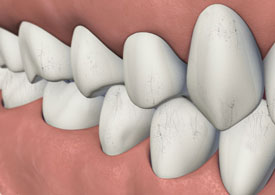
Craze lines
These are tiny cracks that only affect the outer enamel of the tooth. These cracks are more common in adults. These types of cracks are superficial and are usually of no concern.
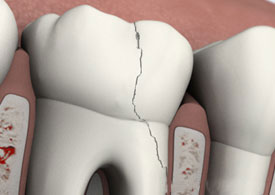
Fractured Cusp
When a cusp becomes weakened, a fracture may result. The cusp may break off or be removed by a dentist. A fractured cusp rarely damages the pulp, so root canal is not necessary. Your dentist will usually restore the tooth with a full crown.
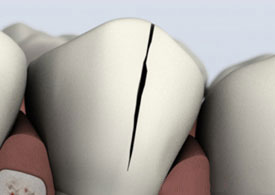
Treatable Cracked Tooth
This type of crack extends from the chewing surface of the tooth and vertically migrates towards the root. In some cases, the crack may extend below the gum line. It is possible for the crack to extend further into the root. Damage to the pulp is commonplace. In this case, root canal treatment is usually necessary. A cracked tooth that is not treated will worsen, resulting in the loss of the tooth. Therefore, early detection is essential.
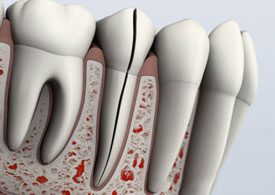
Split Tooth
A split tooth is usually the result of an untreated cracked tooth. It can be identified by a crack with distinct segments. This type of tooth can never be saved intact. Yet, the position and extent of the problem will dictate whether any portion of the tooth can be saved. Sometimes, endodontic retreatment by the doctors and restoration by your dentist can be used to save a portion of the tooth.
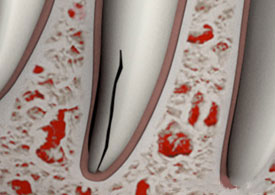
Vertical Root Fracture
A vertical root fracture begins at the root and extends towards the chewing surface of the tooth. Unfortunately, they show minimal symptoms and may go unnoticed. Treatment involves endodontic surgery if a portion of the tooth can be saved by removal of the fractured root. Otherwise, the tooth will have to be extracted.